Ever thought to yourself, “Gee, my life would be complete if had a dubiously collectable statuette of a superheroic fairy resembling an ABC Family incarnation of Tarot…especially one that appealed to shallow, commercialized forms of female empowerment and breast cancer awareness! Oh, if only such a thing existed!”


Your prayers have been answered — and for the low, low price of two installments of $19.99 plus shipping!

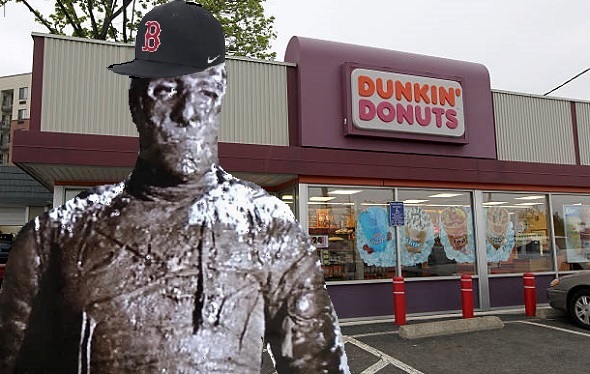
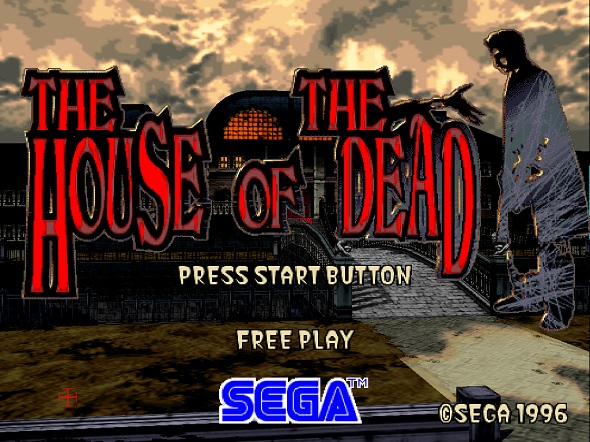
The Plutonium Man…

…is an abomination of science after my own heart.

Recommended listening: Sounds like a plan.

You know things have taken a terrible turn when a major news portal runs this…

…as a featured article.

The American middle class has traditionally been a self-defined affair reflecting attitudes shared across income brackets and signified by the sense that one had carved out a comfortable stake (to enjoy and presumably build upon) in the collective fantasy known as the American Dream.  For most of the post-WW2 era, it was considered to be the default demographic, claimed by small business owners and factory workers alike. 

It represented this society’s solid center, the deciding majority, and its existence and scope were cited as proof of the superiority of the American way of life…and the failure of Karl Marx’s economic models of capital versus labor.   If the  presence of huge and relatively comfortable middle class meant that America “got it right,” what does its accelerating decline — to the point where we have to (re)define its qualifying criteria — mean?

The article does touch upon some of the root causes of the shrinking middle class, though it portays them (in typical business-speak form) as impartial forces rather than policies created and pursued by folks with specific agendas — in other words, the abandonment of the postwar social contract and its Keyensian underpinnings in favor of upward concentrations of wealth that present the illusion of prosperity without resulting in little things like a decent standard of living and viable opportunities for a growing number of Americans.  (No worries, because the Powers That Be are going to throw half-assed unfunded educational mandates around until the Blue Fairy magically transforms a couple million unemployed blue collar workers into skilled biotech wizards…and thus extend the wage-depressing labor surplus into a bold new frontier.)

The article’s checklist of middle class prerequisites is depressing enough, considering how it treats basic needs like pension plans and health insurance as luxurious status symbols instead of the once ubiqiutous givens they used to be for the workforce.  (In a pathetic effort to win over some of the knuckledragging readers of its right-wing tabloid rival, the ostensibly “liberal” Boston Globe has waged an editorial crusade against the “unwarranted perks” unionized state employees supposedly receive — like pension plans and health insurance — which the Globe argues are out of step with the infallible “private sector.”  Not mentioned is the fact that these benefits were started as weak, underfunded imitations of private sector benefit packages which the public unions have battled to retain and non-unionized private employees have been blackmailed into surrendering.)

As bad as that insidious inversion of the social contract was, the article reaches its nadir in its deployment of vapid Algerisms that subtly lay the onus on individual workers.  Take on an extra job!  Work harder!  Get lucky!  Look, I realize that under the capitalist system we all can’t own new Cadillacs and light Havana cigars from hundred dollar bills, but a reasonably motivated and competent full-time worker should be entitled to every single one of those “middle class” benefits as the friggin’ baseline. 

“The land of opportunity” is as it does, damn it, and it has been doing less and less for decades now.

Recommended listening:  Yes, indeedy.

Imagine you’re speeding down the highway in a souped-up Bugatti when the vehicle’s brakes suddenly lock up, vaulting you through the windscreen on a trajectory that takes your fragile body through a poultry processing plant, an ebola research facility and a tallow factory before depositing you headfirst in the local sewer treatment plant’s solid waste collection tank.

Not a pleasant image, but it does reflect the direction DC’s 1990s JLA series took after Grant Morrison’s departure.  Desperate to maintain the successful (and profitable) momentum established by Morrison’s three-and-a-half year run, DC dispatched a series of high-profile creative teams with a mandate of keeping the fires of high-concept storytelling burning….and in the process brought about some of the most excruciatingly awful comics of the previous decade.

If Chris Claremont and John Byrne’s “Tenth Circle” arc represented the final destination cited in my grotty little metaphor (thanks to the presence of Crucifer), Joe Kelly’s “Obsidian Age,” which kicked off in JLA #69 (October 2002), would be the tallow factory.  Overlong and underplotted, the Obsidian Age took an “everything including the kitchen sink” approach that attempted to ape surface elements of Morrison’s stories while missing the crucial details which made the source material work.  Time travel, zombie Justice Leaguers, and ancient Atlantean politics were thrown together in a clumsily handled knot of parallel narratives ultimately dedicated to setting up yet another (destined to fail) Aquaman relaunch.  While some knuckledraggers claim Morrison’s “Rock of Ages” JLA arc was a confusing mess, the Obsidian Age was the real deal – one of the most impenetrable trainwrecks ever to emerge from a major publisher.

Part of the arc’s parallel narratives involved the activation of a contingency team of Leaguers set up by Batman to carry on the good fight in the event of the main team’s demise.  The replacement JLA roster followed the tried and true rules for superteam stunt casting, featuring a mix of old hands (Firestorm, Green Arrow), wildcards (the Demon, Major Disaster), and the requisite “new kid” in the form of…

…the turtleneck rockin’ telekinetic known as Faith.

Nicknamed the “Fat Lady”  (due her secret superpower* not her waistline, because you don’t get rich by alienating fanboys with superchicks over size 4), Faith was a deep cover Batman contact summoned to active duty.  Her origin was presented as a work in progress…

…though it was soon revealed that she was the product of a secret black ops program who rebelled against her…..ZZZZ-ZZZZZZZ-ZZZZZZZZZZZZZ-ZZZZZZZZZZZZ-ZZZZZZZZZZZZZZZ-ZZZZZZZZZZZZZZ-ZZZZZZZZZZZ… 

Whoops, sorry.  Nodded off there for a bit. 

Further details regarding Faith’s past involvement with a sinister organization of “Clockwatchers” led by some dude named Manson were doled out via some oddly blocked panels featuring some cyberpunk dominatrix bounty hunters in a hidden jungle lair and a poignant sequence where the heroine did a teary stiptease in front of Major Disaster.

Faith’s stint as a Leaguer was relatively low-key.  When she wasn’t haranguing her teammates with quasi-objectivist rants on morality…

…she found other empowering ways to occupy her time.

Her proudest moment as a JLA member came during the aforementioned “Tenth Circle” arc, when she sacrificed her last vestiges of dignity so that past-peak Chris Claremont could show the world that he was still “hep” to what “the kidz” were into in this “mod” and “groovy” new millennium.

Following the conclusion of the Tenth Circle, Faith was handed over (like a smallpox blanket, only with a deserving recipient this time) to John Byrne’s ill-conceived Doom Patrol relaunch, where she stood around in the background for a couple of panels before fading into the limbo of the unloved, where she has remained since.

As the misbegotten product of one the worst story arcs in recent memory, and for being forgettably generic even in her most aggressive moments of fanboy pandering, Faith has earned the distinction of being this week’s Nobody’s Favorite

*Pretty much her normal telekinetic abilities pushed to the max, which makes “long established genre trope” a superpower, I guess.

This one’s for the Queen of Animals:


#741: Billy Idol – White Wedding


#342: The Church – Under the Milky Way


#681: Nina Hagen – Hold Me

After weeks of fence-sitting, I finally gave in and bought a fancy new model Xbox 360 to replace my aged, noisy, and increasingly eccentric console before it permanently went tits up on me.

While it’s nice to have a machine that doesn’t sound like an idling jet engine (as well as a fresh, functioning controller and a headset that hasn’t been munched on by a bored puppy), the byzantine process of shifting content and transferring licenses between console has got me longing for simpler times…

…when game ads didn’t bother with things like spelling or grammar and mail order retaliers offshored their customer support to sexy robot call centers in Synnibarr.

Here’s a cheery reader response to a 1951 LIFE Magazine article about interracial marriage:

Times have changed since then.  Today’s bigots would never use correct grammar and punctuation in their violent, hate-filled public rants, much less sign their real name to them.

Today we’re going to take a look back at the golden age of mail order fashion flyers, where uncomfortable ensembles with bizarre names are always in style.

The Peter Pan — for when you want a support garment that evokes the rare mystique of a pre-adolescent boy frequently portayed on stage by small chested adult women.

Evolutionary timeline for the Textron fashion brand:
1950s: Textron
1960s: Pee-Jays-a-Go-Go
1970s: Groovejamas
1980s: Textron Classic
1990s: Pajamas.com
2000s: Freedom Jammies
2010s: iJamas

“You call those feet, buddy?  I’ve seen lepers with better looking toes.  Jeez Marie, what a stink! Have you been using roadkill for insoles again?”

Recently unveiled at Arhkam’s fashion week, the squamously stylish Coat-that-Grows is crafted from cashmere hand-shorn from the Goat with a Thousand Young by native shoggoths.  It’s non-euclidean sizing ensures it will fit both young and Old Ones equally well.

….

….

Boy, the English language sure has evolved since 1951, hasn’t it?

If you’ve been following Armagideon Time these past four years, you may have noticed that I have no small affection for a certain bipedal jungle cat with a fondness for plaid jackets. While the nefarious Mr. Atom is — by virtue of his metaphorical significance — my favorite ancillary character to emerge from the post-WW2 run of Fawcett’s Captain Marvel Adventures series, Mr. Tawny the Talking Tiger comes in as a very close second.

Tawny (sporting a slightly darker shade of orange fur) made his debut in the pages of Captain Marvel Adventures #79 (December 1947), in which the rather civilized jungle beast abandoned his savage home in favor of such modern comforts as picture shows, ice cream, and comfy turtleneck sweaters. Though originally perceived as a dangerous threat by Captain Marvel, Tawny’s sincerity and kind-hearted nature won over the World’s Mightiest Mortal, and they quickly became close friends.  (His first name, “Talky,” was added a couple years down the line via a reader submission contest.)

Tawny’s facility for speech and civilized demeanor were explained a few issues later, when it was revealed that a young Tawny’s consciousness had been raised after imbibing a mysterious potion offered by a Conradian jungle hermit — a superfluous clarification, considering the generally whimsical tone of the CMA tales, where a talking tiger was one of the least improbable story elements of that era.

Tawny represented more than a touch of whimsy or a mercenary nod to the success of the “funny animal” genre, however.  Where Captain Marvel exemplified childhood power fantasies — a young boy capable of transforming into a nigh omnipotent adult — Tawny exemplified the painful realities of growing up and attaining maturity.  Where Billy/Marvel exhibited a strong sense of level-headed wisdom, Tawny was all-too fallible mixture of naievity and insecurity prone to getting fouled up by one dubious decision after another.

Fawcett took pains to emphasize the “educational” aspects of their comics, right down to creating an “advisory board” of experts — including Eleanor Roosevelt for a while — to vouch for the content and most of Tawny’s CMA appearances concluded with a teachable moment of hard-gleaned wisdom.  Tawny certainly did fill the Goofus role to Billy/Marvel’s Gallant but there was a crucial difference in tone from the usually harsh ”doo bee/don’t bee” dichotomies found in vintage moral education primers and the amoral object lessons that characterized the later, similar relationship between Superman and the orange-haired, plaid-jacketed screw-up Jimmy Olsen.

Tawny’s judgement may have been imperfect, but his character was shown to be fundamentally sound — a hard-working, kind-hearted Joe commited to the welfare of his friends and his community.  His intentions were noble enough, but his lack of street-smarts made him susceptible to the predators that stalk the jungle of post-war modernity, be they confidence men, demagogues, or mental stresses caused by contemporary life.

In that sense, Tawny can be seen as a symbol of the massive changes the American people underwent in the immediate post-war era.  While the elders of the First World War era wondered how they’d keep their kids on the farm after they’d seen Paris, the aftermath of World War II unleashed a unprecedented wave of mobility, not just geographical, but social and economic as well.  America emerged from the conflict as the pre-eminent financial and military power on the planet, with the last vestiges of its (more mouthed than observed) isolationist traditions stripped away and replaced with a sentiment of global stewardship (just, necessary, or otherwise).

The G.I. Bill opened up educational opportunites, labor shortages and a switch to consumer production led to the rise of new economic hubs and patterns of worker migration, and the smaller (and more mobile)  ”nuclear family” unit began to replace the extended localized kinship networks of previous generations.  It was a whole new ballgame, yet the rules and expectations had yet to be clearly stated.

Into this vacuum rushed a din of conflicting voices from the usual quarters, from church pulpits to the rarefied heights where professional finger-waggers dwell to the snake oil refineries to, of course, Madison Avenue.  All tried to stake claims on that virgin territory ripe with the pent up dreams and ambitions of a generation which had undergone the hardships of the Great Depression and a global war.

And in the middle of it?  A hard-working civilized tiger with modest aspirations, worrying about whether folks really like him, his growing waistline, and whether or not he’ll be allowed to move into a restricted subdivision because of his ancestry.

Recent creators have tried to “modernize” and “rationalize” Tawny’s presence in the Marvel Family, retconning him into a magically transformed stuffed animal as well as a mysterious shapechanging guru.  Besides the fact that both these efforts are even goofier and more convoluted than “a tiger who drank a magic intelligence potion,” they ignore Tawny’s deeper significance…and killer fashion sense.

Next Page »